Decide what you want people to say
Before talking about channels, three questions. Who should talk about your event: your clients, the press, creators, your teams? What should they remember, in a single sentence? What will prove, a week later, that it worked?
One message holds better than a complete one. It guides the name of the event, the venue, the invitation, the content and the debrief. Our brief template asks these questions in order.
Before: announce without revealing everything
The invitation is already content: its subject line, its card, its first message set the tone. It goes out early enough for diaries to clear, and it leaves some surprise for the day itself.
For the press, a save the date comes before the personalised invitation, with the editorial angle in two lines. For creators, we choose for affinity more than audience, and we say what is expected from the invitation onwards. Our press trip kit gives the templates.
During: a moment that films itself
An event people talk about contains an image they want to show: an everyday setting, a luxury object that has no business being there, someone playing along. Our test is simple: can it be redone as a Reel? If so, the content makes itself during the evening, without being asked.
Filming is prepared like everything else: photographer and videographer briefed beforehand, lighting designed for the image, a quiet area for speeches. A sign at the entrance tells guests they will be photographed or filmed, and those who prefer not to be are identified at the welcome desk.

Our team produced: Paris Blockchain Week, a dinner for 600 guests under the Louvre Pyramid. Photo: Dare-Dare.
After: extend the event
The next day, a photo recap and a short video go to the guests, with a personal thank-you. Social content is spread over several days rather than published in one block, and press coverage is tracked and listed.
Rights are checked before publishing: consent of recognisable people, rights to the music used in a video, a disclosure of any creator partnership.

Our team produced: Maybelline NYX, VIP box at the Accor Arena. Photo: Dare-Dare.
Press, creators, teams: who talks about what
Three audiences, three kinds of content. The press wants an angle, verifiable figures and rights-free visuals. Creators want a venue that films well and freedom of tone. Your teams want to know what happened, and to be proud of having contributed.
This is the logic of our influencer events, our press trips and our product launches: the venue, the key moment and the guests are chosen for what each of them will be able to tell.
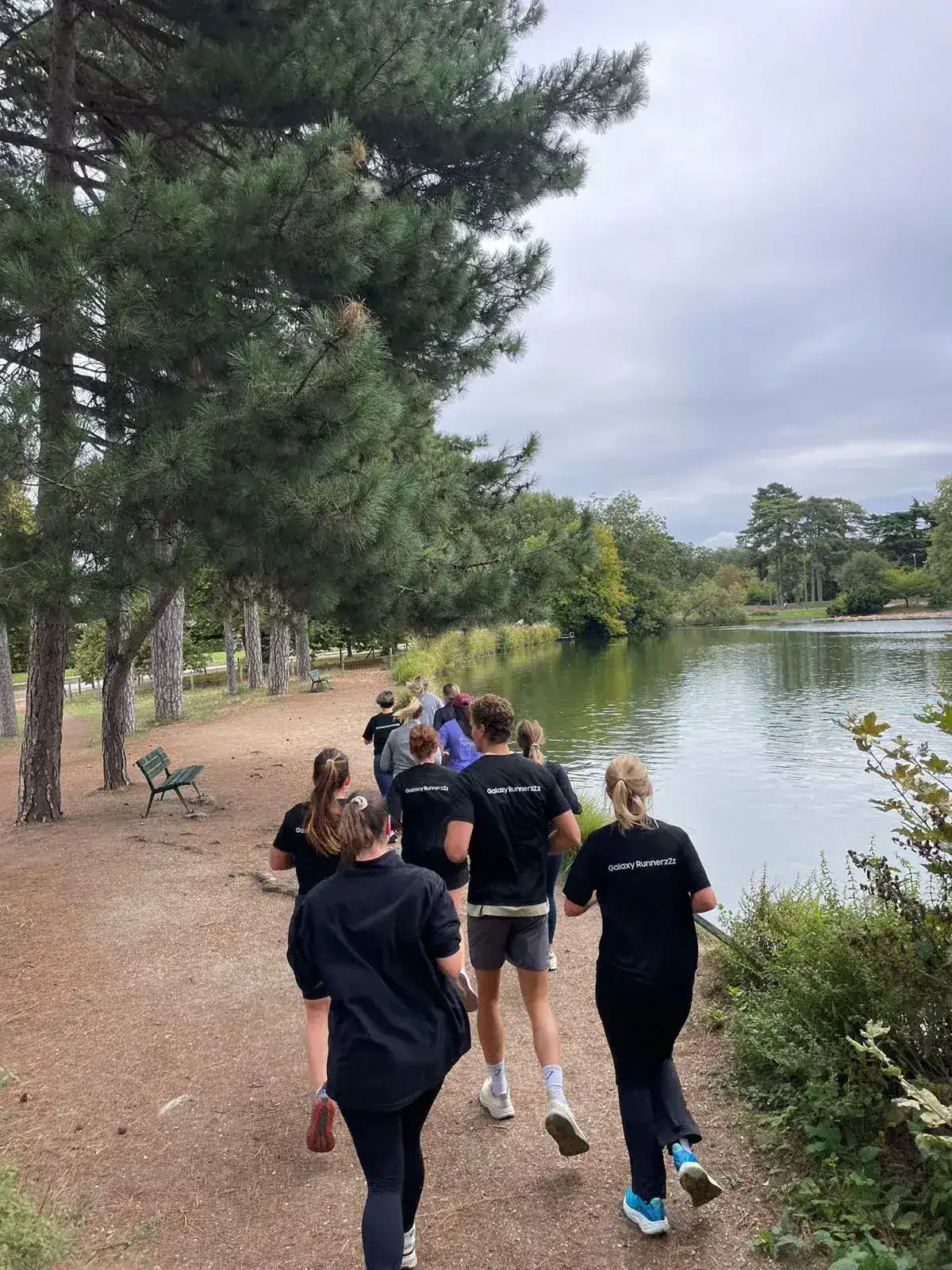
Our team produced: Samsung Influences. Photo: Dare-Dare.
Measure what was said
Indicators are set before the event, not after: attendance rate, listed press coverage, content produced and picked up, enquiries received in the following days. A figure without a starting point proves nothing.
We deliver a debrief with these indicators, the photos and videos, and what we would do differently.
Our checklist before you communicate
A one-sentence message. A list of who should talk about it. A carefully made invitation. A signature moment that films well. A briefed photographer and videographer. A sign about images. A recap sent the next day. Indicators set beforehand, a debrief afterwards.
Frequently asked questions
What is event communication?
It is the set of actions that make an event known and lived before, during and after: announcement, invitations, press and creator relations, content shot on site, thank-yous and a debrief. It serves the event and extends its effect beyond the guests who attended.
When should you start communicating about an event?
As soon as the date and venue are set: the invitation is the first piece of content. For the press, a save the date goes out several weeks ahead; for a launch or a press trip, allow 2 to 3 months of preparation.
Should you invite content creators?
Only if your target audience follows them. We choose them for their affinity with the brand, we plan a venue that films well, and any content obtained in exchange for a gift or payment must be flagged as such (French law of 9 June 2023 on commercial influence).
How do you measure the success of event communication?
We set the indicators beforehand: attendance rate, press coverage, content produced and picked up, enquiries received after the event. The debrief comes with the photos and videos.
How much does event communication cost?
We do not publish standard prices: it depends on the number of content pieces, the filming, and the press and creator guests. We reply within 24 hours with an itemised, line-by-line quote.